
· By the Scroll Breakers team
Scroll through Facebook for a minute and you’ll spot them. The burger that’s a bit too shiny. The living room that looks like a film set. The smiling “customer” with slightly too many fingers.
AI-made graphics are everywhere, and it’s easy to see why. They’re quick, they cost next to nothing, and at first glance they look impressive. For a busy owner in Middlesbrough or Hartlepool with a hundred other jobs to do, typing a sentence and getting a picture back feels like a gift.
But we’re seeing more and more local businesses lose customers because of them. Here’s why, and what to do instead.
Problem one: everyone looks the same
AI picture tools all learn from the same enormous pile of images, so they tend to produce the same sort of look. Glossy. Perfect lighting. Oddly smooth.
That means the pizza on your page looks just like the pizza on the page of the takeaway down the road, and the one in Stockton, and the one in Sunderland. If all three of you use the same tool, you may as well be sharing a photo.
The whole point of social media is to show people why they should pick you. Your shop, your food, your team, your work. An AI image throws that away and swaps it for something anyone could have made in ten seconds.
Customers notice. They may not think “that’s AI”, but they do think “that looks like an advert”, and they scroll past.
Problem two: it can feel like false advertising
This is the big one.
Picture a takeaway that posts an AI image of a towering, perfect parmo, cheese stretching beautifully, chips golden and stacked. A customer in Redcar sees it, gets hungry and orders.
What arrives is a perfectly decent parmo in a box. It tastes great. But it looks nothing like the picture.
That customer doesn’t feel pleased. They feel a bit tricked. And they’re right to, because the picture wasn’t of your food at all. It was of food that never existed.
It’s the same story for a salon showing AI hairstyles nobody in the shop actually cut, a builder showing a kitchen they never fitted, or a furniture shop showing a sofa in a room that isn’t real. When what turns up doesn’t match what was shown, it feels like false advertising. In some cases it could genuinely be treated as misleading, which is a headache no small business needs.
Problem three: disappointed customers don’t come back
One let-down customer is bad enough. But let-down customers also talk.
They leave the review. They post in the local Facebook group. They tell the lads at work. On Teesside, word travels quickly, and a reputation for “looks nothing like the picture” is very hard to shake.
Compare that with a customer whose order looks just like the photo they saw. They’re not surprised, they’re satisfied. They got what they were promised. That’s the customer who orders again next Friday.
Problem four: trust drops, and it drops quietly
Trust is the reason people buy from a local business instead of a big chain. They feel like they know you.
Every fake-looking image chips away at that. People start to wonder what else isn’t real. Are the reviews real? Are the prices right? Is the place even still open?
You’ll rarely hear about it. Nobody messages to say “your graphics made me trust you less”. They simply go elsewhere, and you never find out why.
What works better: the real thing
Here’s the bit that surprises people. A simple phone photo of your real product very often does better than a polished AI image.
Why? Because it’s believable. A slightly imperfect photo of a real pizza, on your real counter, in your real box, tells the customer exactly what they’ll get. There’s steam. There’s a thumb in the corner. It looks like something a person made, because a person did.
You don’t need fancy kit to do this well. A few simple habits go a long way:
- Use daylight. Stand near a window or the shop door. Avoid the flash.
- Wipe the lens. Sounds daft, makes a huge difference.
- Get close. Fill the frame with the food, the haircut or the finished job.
- Show hands and people. A hand holding the product makes it feel real. No faces needed.
- Film short clips. Ten seconds of cheese being pulled or a carpet being rolled out beats any still.
- Show the before and after. For trades, salons and car valeters, nothing sells like the real difference.
Real and designed: the sweet spot
None of this means your page has to look rough. The strongest content is real and well designed.
That means a genuine photo or video of your product, with clean wording on top, your colours, your logo and a clear message. The design makes it look professional. The real photo makes it trustworthy. You need both.
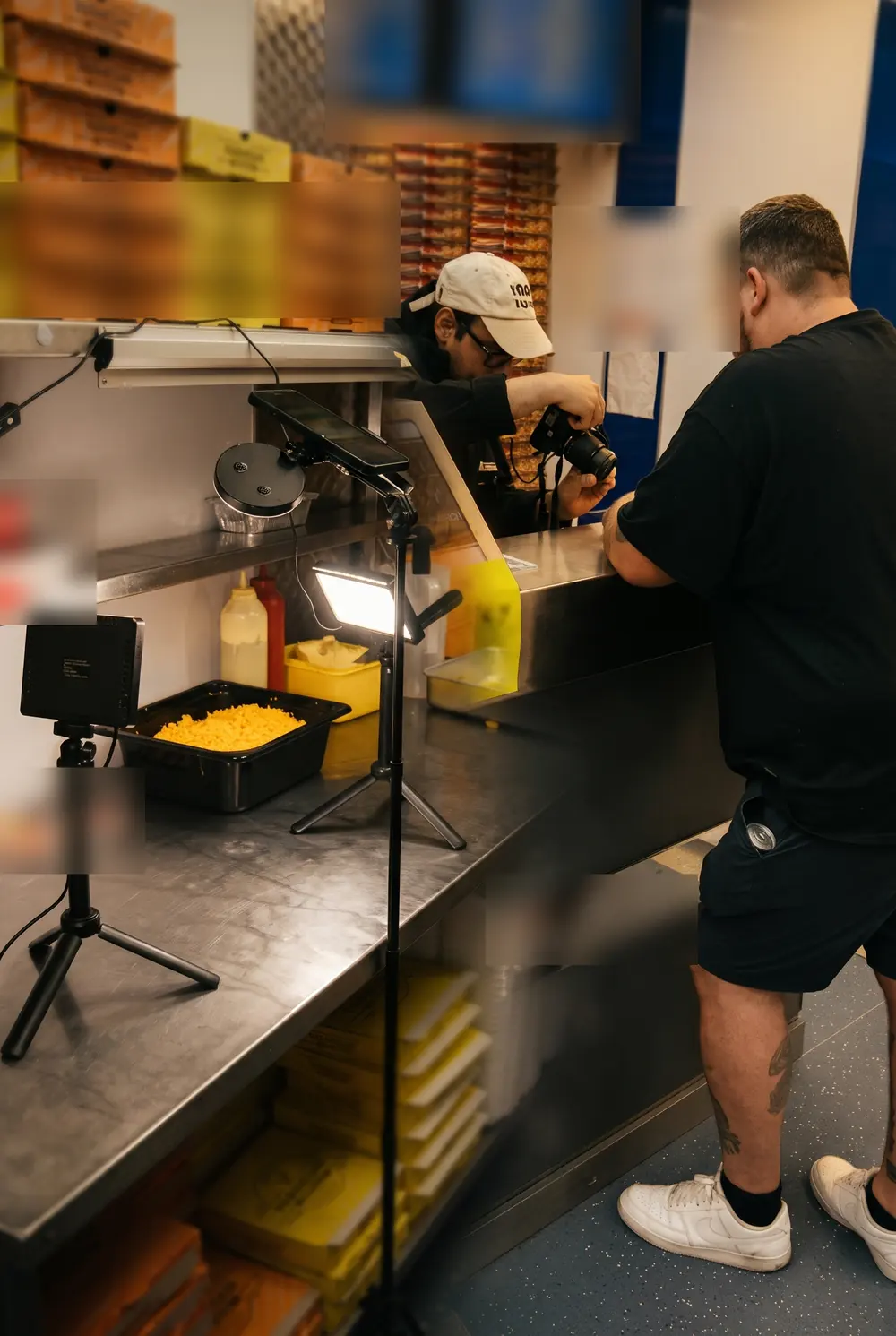
That’s how we work with businesses across the North East. We come to your premises and film the real thing: your food coming off the grill, your showroom, your team at work. Then we edit and design it properly, so it looks sharp but never fake. We do use modern tools, AI included, to speed up editing. What we don’t do is pretend something exists when it doesn’t.
It also makes your adverts work harder. Ads built on real footage tend to get more genuine interest, which matters if you’re paying for Facebook and Instagram ads or trying short videos through TikTok marketing.
A quick test for your own page
Have a look at your last ten posts and ask yourself three things:
- Could another business have posted this exact image?
- Would a customer get exactly what the picture shows?
- Does this look like my actual shop, product or work?
If the honest answers are “yes, no, no”, it’s time for a change. And it’s an easy one to make. Tomorrow, take one clear photo of something real and post that instead.
Want a hand?
If you’d like real, good-looking content without having to make it yourself, that’s what we do. We’ll plan it, film it, design it and post it, and you approve everything first.
Get a Quote and tell us a bit about your business. We’ll come back with a simple plan that fits.